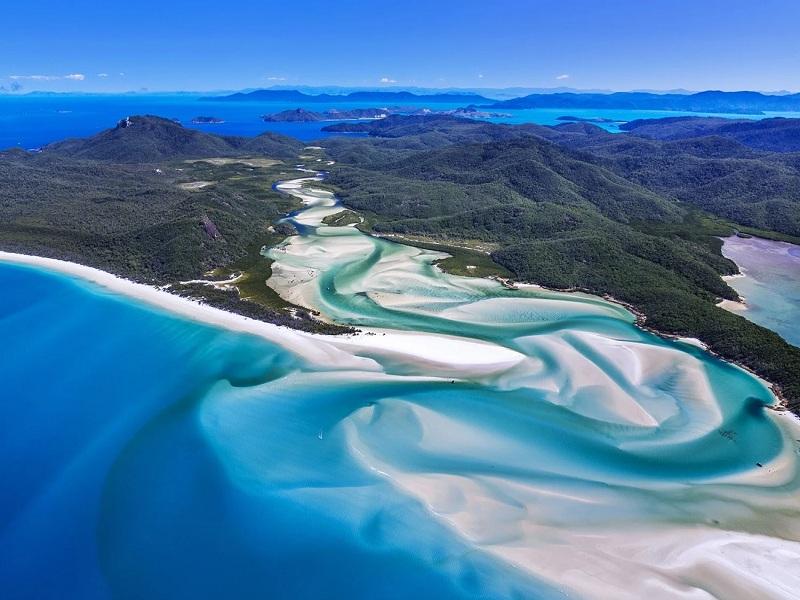
Whitehaven Beach, located on Whitsunday Island, Australia, is one of the world’s most iconic beaches, celebrated for its strikingly white silica sand and clear turquoise waters. Accessible via boat, seaplane, or helicopter from Airlie Beach and Hamilton Island, this pristine destination attracts travelers seeking natural beauty and relaxation. The beach lies opposite Stockyard Beach, also known as Chalkie’s Beach, on Haslewood Island, making it part of a scenic island cluster popular among tourists.
Renowned for its soft, powder-like sand, Whitehaven Beach stretches over seven kilometers and remains virtually untouched due to its protected status within the Whitsunday Islands National Park. The silica sand is remarkably pure, giving the beach its brilliant white appearance and staying cool underfoot even on hot days. Its waters, in varying shades of turquoise, offer calm swimming areas and stunning opportunities for snorkeling and photography.
The beach also provides tour facilities such as barbecues and camping, allowing visitors to enjoy the natural environment while spending a full day or overnight. Historically, Whitehaven Beach was discovered and named in 1879 by Staff Commander EP Bedwell. The name “Whitehaven” was taken from a town in England, reflecting Bedwell’s connections to the English county of Cumberland. This naming followed Captain James Cook’s 1770 designation of the surrounding islands as the Cumberland Islands, highlighting the area’s early European exploration history.
Today, Whitehaven Beach remains a must-visit destination in Australia, offering a unique combination of natural splendor, historical significance, and recreational opportunities for travelers from around the world. Its pristine sands and clear waters continue to make it a symbol of Australia’s coastal beauty.