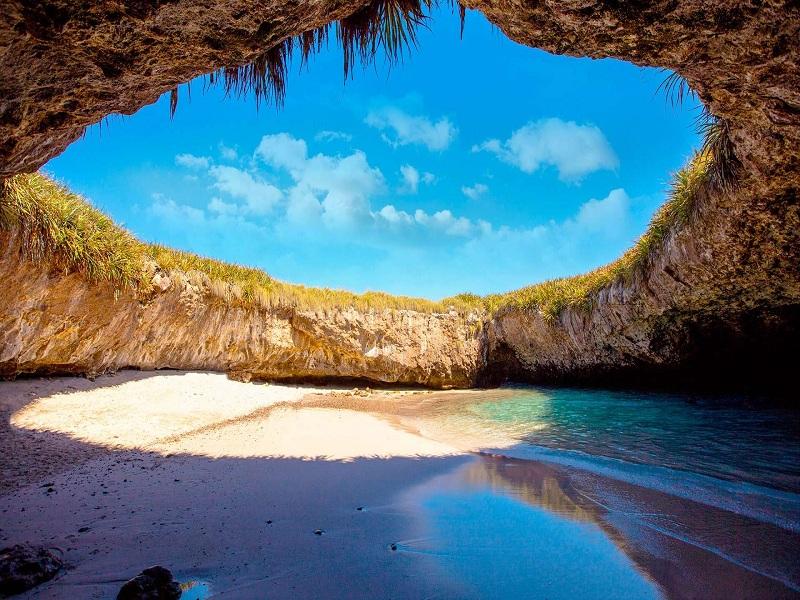
The Marieta Islands are a fascinating cluster of small, uninhabited islands located approximately 7.9 kilometers southwest of Punta de Mita, in the municipality of Bahía de Banderas, Nayarit, Mexico. These islands lie in federal waters and are renowned for their unique geological formations and diverse ecosystems. In the early 20th century, the Mexican government utilized the islands for military testing, taking advantage of their isolated and uninhabited nature. During this period, numerous bombings and detonations dramatically reshaped the landscape, creating caves, tunnels, and unusual rock formations that remain a defining feature of the islands today.
The ecological significance of the Marieta Islands gained international attention in the late 1960s when the famed oceanographer Jacques Cousteau highlighted the environmental damage caused by the bombings. His advocacy and research emphasized the importance of protecting the islands’ unique flora and fauna. Following a global outcry, the Mexican government took decisive action, designating the Marieta Islands as a national park. This designation strictly prohibits fishing, hunting, and other human activities, ensuring that the islands’ fragile ecosystems are preserved.
Today, the Marieta Islands are celebrated not only for their natural beauty but also as a symbol of environmental recovery and conservation. Visitors, through controlled and guided tours, can witness the islands’ pristine beaches, the hidden “Hidden Beach” formed by the collapsed rock formations, and the abundant marine life surrounding the islands. The Marieta Islands stand as a reminder of the delicate balance between human activity and nature, illustrating the power of conservation efforts to restore and protect remarkable natural landscapes.