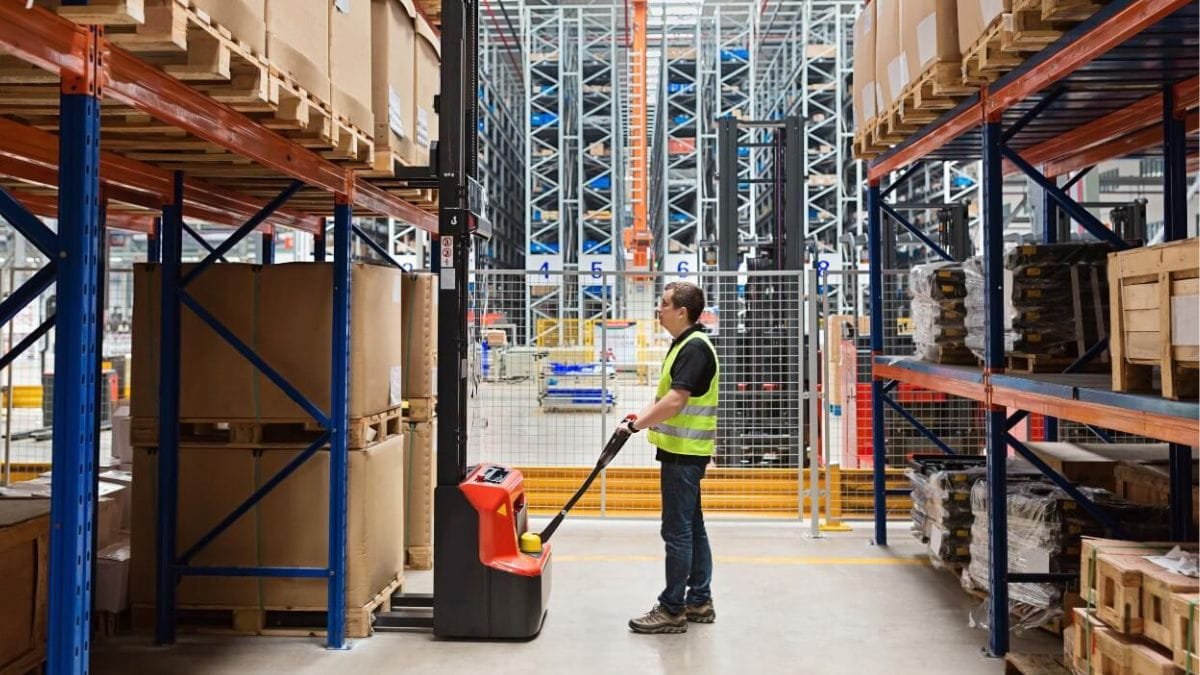
Lifting and handling equipment has become a popular source for modern businesses to move materials. It includes material handling. Material handling refers to the movement, storage, and protection of goods throughout manufacturing, warehousing, and large-scale distribution centers. Whether businesses operate in manufacturing, warehousing, retail logistics, or large-scale product distribution, efficient operation of raw materials and finished goods directly influences safety, cost control, and productivity. As supply chains become more competitive and customer expectations for fast delivery continue to grow, businesses rely on advanced techniques and smarter operational strategies in order to enhance the flow of inventory. This blog explores information about material handling. Read about the material handling, including types, key features, choosing the right material handling system, and more.
Material handling is an approach to the movement, storage, control, and protection of inventory throughout manufacturing, warehousing, and retail logistics and distribution processes. It involves manual tools, forklifts, advanced robotics, fully automated systems, and more. Businesses handle their materials throughout manufacturing, warehousing, and distribution processes, reducing labor costs, minimizing manual errors, speeding up order fulfillment, and enhancing workplace safety.
Material handling is classified into three types: manual material handling, semi-automated material handling, and fully automated material handling.
Manual handling is the most common process of material handling and is suitable for small-scale tasks, small workshops, and retail stockrooms. It typically focuses on human effort to lift, carry, push, or pull items. As workers use simple tools like trolleys, hand trucks, and pallet jacks to complete tasks, manual material handling is suitable for small workshops and retail stockrooms where small-scale tasks are completed. This is a cost-effective process because it includes the risks of workers related to workplace injuries.
Semi-automated material handling is another approach to handling materials in companies. In this approach, workers use devices such as forklifts, stackers, and electric pallet movers and operate machinery. This approach involves both manual handling and automated material handling.
Fully automated material handling is an ideal approach for high-speed warehouses, production plants, and e-commerce fulfillment centers. By using automated storage, automated guided vehicles (AGVs), robotic arms, and advanced conveyor lines, businesses can handle their material efficiently and move goods seamlessly. This approach reduces downtime and eliminates manual bottlenecks, significantly improving productivity.
Modern material handling systems offer a lot of key features, including:
Flexibility in Layout and Use
Durability and Structural Strength
Smart Automation Capabilities
Effective material handling is a great way to keep goods safe and protected. It is not limited to warehouse storage; it is suitable for manufacturing, warehousing, retail logistics, and distribution centers. Read below to learn the detailed examples of use scenarios across different industries.
Cold storage and food distribution warehouses use material handling processes to safely, fresh, and protected their items. They are typically temperature-controlled warehouses that often combine conveyors, vertical storage, and automated pallet racking system installations.
Manufacturing plants depend on lifting and handling equipment to move raw materials, assemblies, and finished parts between workstations. They use automated pallet conveyor systems to streamline repetitive tasks such as transferring parts to assembly lines or packaging units.
Retail and e-Commerce companies also use handling equipment like automated racking and conveyor solutions, which are great in minimizing picking errors and enhancing customer satisfaction.
Here are trusted providers offering high-quality equipment, automation solutions, and integrated warehouse systems.
SSI Schaefer is a global leader in storage and automation systems. It offers solutions that integrate smoothly with lifting and handling equipment and complex warehouse operations, making it ideal for manufacturers, warehouses, and distribution centers.
It is also a provider offering advanced automated pallet conveyor systems, robotic sorting, and high-capacity movement techniques suitable for large distribution centers.
It is another provider of material handling solutions. It is known for innovative automated pallet racking system integrations and intelligent warehouse solutions, making it a top choice for many warehouses that improve productivity and space utilization.
Selecting the right material handling system can be daunting because it requires understanding project requirements, space limitations, and future growth. Here is a breakdown of the important factors to consider when choosing the right material handling system.
Before making an informed decision on a material handling system, start by analyzing the size, shape, and weight of goods. For example, heavy products require robust lifting and handling equipment. Assess load characteristics and storage density of your business before selecting a material handling system.
When selecting the perfect material handling system, there is another factor to consider. Understand the workflow and movement patterns of your company. Consider taking an automated pallet racking system because it facilitates limited floor space, enabling taller storage and faster retrieval.
Material handling supports efficient, safe, and cost-effective industrial operations. As businesses grow and customer for fast delivery, the demand for advanced systems continues to grow. By using solutions ranging from smart storage to automated conveyors and specialized lifting tools, manufacturing companies, warehouses, retail logistics service providers, and large-scale product distributors can build strong, future-ready infrastructure.
To select the right material handling system, analyze the size, shape, and weight of inventory, and understand the workflow and movement patterns of the business.
This is a simple guide to material handling. Explore details about material handling by trying an online search.